 Home >
Membrane Structure
Home >
Membrane Structure

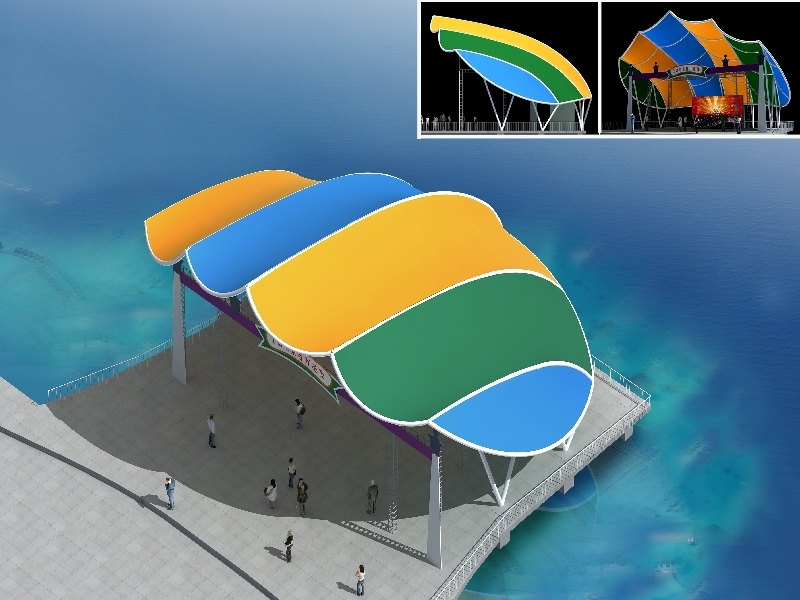
The membrane structure, a novel architectural form developed in the mid-20th century, is a spatial structure composed of various high-strength thin-film materials such as PVC or Teflon, reinforced with steel frames, steel columns, or steel cables, through which a certain pre-tension stress is generated internally to form a specific spatial shape. It serves as a covering structure and can withstand certain external loads.
The pioneer of tensioned membrane structures was Otto F. Otto from Germany. In 1955, he designed a tensioned membrane structure with a span of around 25 meters for the multi-functional exhibition hall in the HafenCity park.
This widely favored new architectural form is characterized by its light weight, high strength, fire resistance, good self-cleaning properties, resistance to twisting, aging resistance, and long service life. It boasts excellent characteristics such as low transmittance and minimal heat absorption. Additionally, it offers various advantages including a wide range of applications, the ability to cover large-span spaces, and a short construction period. Therefore, membrane structure buildings are bound to become a permanent feature of modern architecture.

The cable-membrane structure is a stable curved surface formed by highly flexible thin-film materials subjected to the tensile and compressive forces of camel materials, capable of withstanding certain external loads. It is lightweight, graceful, full of strength, and safe. It has been widely used around the world. As a new architectural form, membrane structure architecture began to emerge internationally in the 1950s and has a history of several decades. Especially since the 2010s, the application of membrane structures has developed rapidly and is widely used in various fields.
Cultural facilities: exhibition centers, theaters, conference halls, museums, botanical gardens, aquariums, etc
Commercial facilities: shopping malls, hotels, commercial streets, shopping centers, etc
Transportation facilities: airports, train stations and docks, toll stations, overpasses and connecting corridors, gas stations, car sheds, etc
Industrial facilities: factory warehouses, research centers, logistics centers, greenhouses, etc
Not only can membrane structures replace traditional architectural structures in the above fields, but with the deepening of architectural spatial concepts and the continuous improvement of scientific methods in recent years, "returning to nature" and "bathing in the warmth of nature" have become the mainstream of modern architectural environmental studies. Due to the translucency of membrane materials, sunlight can pass through the membrane to form diffused light, making the interior of the membrane-covered space achieve a natural effect almost identical to that of the outdoors. Therefore, membrane structures can also create spatial forms that are comparable to the natural environment.

The membrane structure is a newly developed form of architectural structure. Since 1970, it has gradually been applied in large-span buildings such as sports facilities, shopping malls, exhibition centers, and transportation service facilities abroad. The membrane structure has become a major option in structural design and an important field of application for chemical fiber textiles. In recent years, it has also made significant progress in Chinese architectural structures. The development of modern spatial structures has been influenced by advanced domestic technologies.
In recent years, there has been an active trend in the application of membrane structures. Although the initial projects were not large in scale, the use of this new architectural approach will inevitably expand to cover larger areas and spans.
Under the international trend, Shanghai Bin Xin Steel Membrane Structure Engineering Co., Ltd. will undoubtedly pursue more perfect, safe, innovative, and exquisite membrane structure projects with more professional skills and rich experience. We sincerely hope to work with people of insight from all walks of life to create a more brilliant future for China's membrane structure industry.
With the recent warming weather, it seems as if Shanghai's scorching summer has already arrived. During site inspections, I often find myself unable to look up due to the sunshine overhead, and the reflection from the membrane fabric makes the situation even worse. While providing protective glasses for frontline employees, I, as a senior practitioner in the membrane structure construction industry, have noticed that there are very few (almost none) reports and studies focusing on light pollution from membrane structures in the industry; the industry association has also not issued any operational guidelines in this regard. Therefore, I would like to express my company's insights here:
The reflectivity of general membrane materials is around 70%. In residential areas, hospitals, and schools, it is not advisable to design (or construct) membrane structures between buildings.
2. If there are membrane structure buildings within the community, it is advisable to form an angle of 45 degrees or greater with the main body of the building to create a reflective effect, which may affect people's daily life and study.
3. If there are membrane structure buildings in the community, it is advisable to choose light-colored membrane materials and those with a moderate glossiness.
4. A suitable distance of 28-50m or more should be maintained between the membrane structure building and the main building.

The drainage system of the parking shed is crucial. If not properly handled, water may seep down and drip onto the cars, affecting their paintwork. Moreover, the water can also penetrate into the internal metal structure of the parking shed, rusting its metal components. Therefore, the drainage pipes must be well constructed.
There are three types of drainage pipes for parking sheds:
1. Groove-type drainage pipes are typically installed on the top of parking sheds in the form of grooves. For aesthetic purposes, we usually adopt an embedded layout, which is commonly used in steel-structured parking sheds. It is important to pay attention to the direction of backflow and height during installation, and to regularly inspect and clear any debris that may block the passage.
2. Drainage hole type drainage system: A drainage hole is made at the lower end of the shed roof, allowing sewage and rainwater to naturally drain through the shed and out through the drainage hole. This type of system is commonly used in membrane structure parking sheds. The key point to note is that the location of the drainage hole must be chosen reasonably, otherwise it can lead to water accumulation or even damage to the membrane structure of the shed roof.
3. The counterflow drainage system is a relatively advanced drainage system. It utilizes a wind-reversing system installed at key locations in the parking shed to uniformly draw rainwater and sewage into the sewage tank for discharge to the ground, achieving the highest drainage rate.

The parking shed is a membrane structure that fully utilizes the application of this structure. So what are the functions of a parking shed with this membrane structure?
The parking shed adopts a membrane structure as its primary structural form because this membrane structure serves multiple purposes, including providing shade, sheltering from rain, and enhancing aesthetics. It utilizes steel, steel cables, membrane materials, and other raw materials as the primary construction materials for the shed. Various high-strength membrane materials are connected through reinforced components such as steel frames, steel columns, or steel cables, creating a certain degree of pre-tension stress internally and forming a specific spatial shape. As a covering structure, the membrane can withstand a certain degree of external load.
It also boasts high strength, excellent durability, fire resistance, good self-cleaning properties, and is unaffected by ultraviolet rays. Its service life is typically long, with 15-30 years being no problem. Furthermore, it features high light transmittance and high thermal reflectance, with a light transmittance of 13% and a thermal reflectance of 73%, resulting in minimal heat absorption. Therefore, its applications span communities, schools, businesses, stadiums, and government agencies.

In daily life, we often encounter various sunshade and canopy structures, with membrane structures and sunshine panels being relatively common. Both have their advantages. This article aims to introduce membrane structures and sunshine panels to you, so that you can have a deeper understanding of them:
1. External image: The sunshine board gives a rigid and dull impression, whereas the membrane structure evokes a soft and elegant aura, possessing artistic value.
2. Material price: The price of sunshine board is lower than that of membrane structure.
3. Service life: The service life of the membrane structure is twice as long as that of the sunlight panel, featuring a long service life and high long-term benefits.
4. Self-cleaning property: The sunlight panel does not have self-cleaning property. Once dust adheres to it, it forms dirt, requiring manual cleaning, which incurs high maintenance costs. In contrast, the membrane structure possesses self-cleaning properties, and it can be refreshed with just a rain wash.

ADD:
TEL:021-64299222
EMAIL:Lizhi66327@163.com、914490826@qq.com
FAX:021-54339622
MOB:13816961888 | 18801818658
沪ICP备14044943号-1 网站地图 技术支持:网站建设-网站推广-网站维护